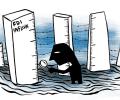
The Union Cabinet on Thursday approved a proposal to allow 100 per cent foreign direct investment (FDI) in public sector refiners, expanding the scope for FDI in the privatisation of Bharat Petroleum Corporation Ltd (BPCL). The approval by the Cabinet will enable the sale of the government's 52.98 per cent stake in BPCL to a foreign buyer, and, at the same time, will open the door for FDI in other public sector companies in the oil sector put up for privatisation.
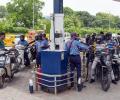
Petrol and diesel price hikes are likely to resume after state elections get over next week to bridge the Rs 9 a litre gap created by international oil prices soaring past $100 a barrel. International crude oil prices shot above $110 a barrel for the first time since mid-2014 on fears that oil and gas supplies from energy giant Russia could be disrupted, either by the conflict in Ukraine or retaliatory western sanctions. The basket of crude oil India buys rose above $102 per barrel on March 1, the highest since August 2014, according to information from the Petroleum Planning and Analysis Cell (PPAC) of the oil ministry.

Shares of public sector enterprises have corrected by up to 22 per cent month-to-date until March 19, 2024. Analysts attribute this steep fall to the valuation exuberance seen after a sharp run in these counters last year and suggest investors remain selective regarding the stocks in this space. "The rally in public sector undertaking (PSU) stocks has been stretched and sharp, although it is somewhat justified by improvements seen in earnings, operations, balance sheets, and overall profitability.
The Oil Ministry has fixed the subsidy payout by upstream firms like Oil and Natural Gas Corporation and Oil India Ltd at Rs 15,546.65 crore (Rs 155.46 billion) for the April-June quarter.

10 central trade unions have called a nationwide shutdown against 'anti-worker policies' of the central government. Apart from being successful in Bengal, Kerala and NE states, the bandh has also got support from Cong leader Rahul Gandhi and Shiv Sena in Maharashtra.

Petroleum Minister Dharmendra Pradhan's wish to levy indirect tax on petrol unlikely to be taken up
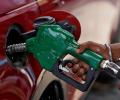
Petrol price on Wednesday touched a new high of Rs 84.45 per litre in the national capital after state-owned fuel retailers hiked prices after a five-day hiatus. Petrol and diesel prices were hiked by 25 paise per litre each, according to a price notification from oil marketing companies. In Delhi, petrol now costs Rs 84.45 per litre and diesel is priced at Rs 74.63. In Mumbai, petrol comes for Rs 91.07 a litre and diesel for Rs 81.34. This is the highest ever price of petrol in Delhi, while diesel is at a record high in Mumbai.
Vedanta group chairman, Anil Agarwal, 69, is well known for his business journey from a scrap dealer from Bihar to a London-based globe-girdling metal and oil and gas conglomerate with revenues of $19 billion. Now his abilities to keep his group from over-leveraging itself will be put to the test. Over the years, Agarwal, now based in London, set up the conglomerate via acquiring iron ore producer Sesa Goa, Cairn's oil producing assets in India, and Electrosteel Steel.
Officials said there had been no official word or indication from the top yet. The expectation from officials is to do what they can, but it is understood that all fiscal and budgetary targets don't matter anymore.

The three state-owned oil companies have decided to defer snapping fuel supplies to Air India. The airline owes the three firms over Rs 5,000 crore in past fuel bills.

Prime Minister Narendra Modi on Friday received Bhutan's highest civilian award, the 'Order of the Druk Gyalpo', making him the first foreign Head of the Government to receive the honour.
Analysts said the higher capex by PSUs, along with government spending, could trigger a capex revival for the corporate sector by the second half of FY17

According to industry experts, the consumption of petroleum products in the month of April was only 30-40 per cent of what it had been prior to the lockdown. Due to this, refineries were forced to bring down their capacity too.

RBML - the joint venture of Reliance Industries Ltd and supermajor BP - has told the government that fuel retailing for the private sector in India has become unsustainable after market-controlling public sector firms frequently froze petrol and diesel prices at rates way below the cost, sources said. Despite a surge in oil prices, state-owned Indian Oil Corporation (IOC), Hindustan Petroleum Corporation Ltd (HPCL) and Bharat Petroleum Corporation Ltd (BPCL) first froze petrol and diesel rates for a record 137 days beginning early November 2021 when five states including Uttar Pradesh went to the polls, and last month again went into a hiatus that is now 47 days old. "They (Reliance BP Mobility Ltd) has written to the petroleum ministry over the fuel pricing issue," a highly placed source in the government, who didn't want to be quoted, told reporters.
Oil marketing companies on Friday cut petrol price by 32 paise, and diesel by 85 paise a litre with effect from midnight tonight.

Corporate earnings grew in double digits during the April-June 2022 (Q1FY23) quarter but the momentum waned. Overall corporate earnings in the quarter were down sharply from their highs in FY22. The combined net profit of 2,981 listed companies across sectors in the Business Standard sample was up 22.4 per cent YoY to Rs 2.24 trillion in the June quarter, driven by a big jump in the earnings of banks, non-banking lenders, oil & producers, and FMCG companies. Also, earnings in the corresponding quarter a year ago were affected because of the second wave of the Covid pandemic, even though the numbers were a lot better than Q1FY21 when there was a nationwide lockdown.
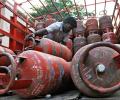
Given that the target was to reach 80.34 million families under PMUY - within three months starting April 1 - the government should have distributed at least 241.02 million cylinders by the end of June. It actually ended up distributing only 119.7 million cylinders.

BPCL gained nearly 4% to Rs 674, while HPCL gained more than 2% to Rs 451.

The increase in rates announced by oil firms is excluding state levies and the actual hike will be higher.

Petrol price was on Wednesday hiked by a steep Rs 3.38 per litre and diesel by Rs 2.67 a litre, reversing a two-month declining trend.
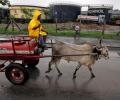
The fuel delivery scheme mainly targets consumers that buy in bulk.
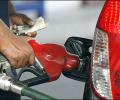
Petrol price was on Monday hiked by Rs 2.19 a litre and diesel by 98 paise per litre.

At the same time, the Cabinet approved reducing government's stake in select PSUs such as IOC to below 51 per cent while continuing to retain management control.

OMCs' Digital India move is likely to have an impact on more than 80.3 million Pradhan Mantri Ujjwala Yojana consumers, majority of whom are not exposed to digital transact.

'This is what happens to a party when it gets trapped in the vicious circle of nepotism and dynastic politics'
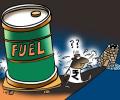
The price of petrol has risen by 83 paise per litre in the past nine days and diesel by 73 paise
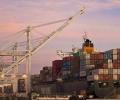
India's merchandise exports spurted to a record high of $418 billion in the 2021-22 fiscal on higher shipments of petroleum products, engineering goods, gem and jewellery and chemicals, according to official data released on Sunday. Outbound shipments touched an all-time high of $40 billion in a month in March 2022, Commerce and Industry Minister Piyush Goyal told reporters. Exports stood at $34 billion in March 2021.
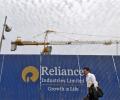
Richest Indian Mukesh Ambani-led RIL was the top private sector company from the country as it jumped from 203rd rank last year to 148th.
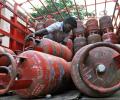
The phased increase of prices is being done to sell the fuel at international prices.
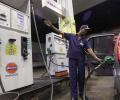
Petrol and diesel prices were hiked by 80 paise a litre each on Wednesday, taking the total increase in rates in 16 days to Rs 10 per litre.
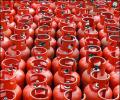
The price of non-subsidised cooking gas (LPG) was on cut by Rs 21 per cylinder and that of jet fuel (ATF) by a steep 3 per cent on the back of falling international oil rates.
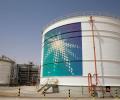
Estimated to cost $44 billion, the project was expected to be commissioned by 2025.
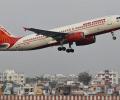
The timeline for disinvestment of Air India and Bharat Petroleum Corporation (BPCL) may be pushed by two to three months due to impact of the second Covid-19 wave. However, the government is confident of wrapping up the sale of the two companies by FY22 and meeting the disinvestment target of Rs 1.75 trillion. This will be achieved by sale of government stake in core and non-core public sector undertakings (PSUs).
India's top fuel retailers IOC, BPCL and HPCL together lost around $2.25 billion (Rs 19,000 crore) in revenue for keeping petrol and diesel prices on hold during elections in five states, including Uttar Pradesh, Moody's Investors Services said on Thursday. State fuel retailers did not revise petrol and diesel rates for a record 137 days despite prices of crude oil (raw material for producing fuel) rising to $120 per barrel compared to around $82 in early November when the hiatus began. "Based on current market prices, the oil marketing companies are currently incurring a revenue loss of around $25 (over Rs 1,900) per barrel and $24 per barrel on sale of petrol and diesel, respectively," Moody's said in a report.
A litre of diesel will cost Rs 48.01 compared to Rs 49.31 at present
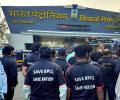
With the privatisation of BPCL appearing inevitable, there are worries that the new promoter would soon move to lower wages.

The resignation also signals a continuing saga of unaddressed concerns of young leaders, once considered close to former Congress president Rahul Gandhi.

'The correction could take two to three months and traders need to be careful.' 'For investors, this could be a good time to nibble in.'
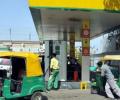
CNG price in the national capital and adjoining cities on Tuesday was hiked by Rs 0.50 per kg, while an imminent increase in petrol and diesel price has been put on wait-and-watch mode for more clarity on global oil prices. CNG price in NCT of Delhi has been increased to Rs 57.51 per kg from Rs 56.51, according to the information posted on the website of Indraprastha Gas Ltd - the firm which retails CNG and piped cooking gas in the national capital. Following the firming up of international gas rates, IGL has been raising CNG rates by up to 50 paise (Rs 0.50) per kg periodically. Prices have gone up by about Rs 4 per kg this year alone.

The government has tweaked the income tax laws to make it easier for the new owners of loss-making public sector undertakings (PSUs) to carry forward the accumulated losses and set them off against future profits. This will result in significant tax savings for the new owners if they are able to turnaround operations of the ailing PSU within a few years. This will, in turn, boost the post-tax earnings and returns for the new owners.
